A Bad Investment
The story of a second-hand bike that cost more time and money than it was worth, and the decision to give up on it.
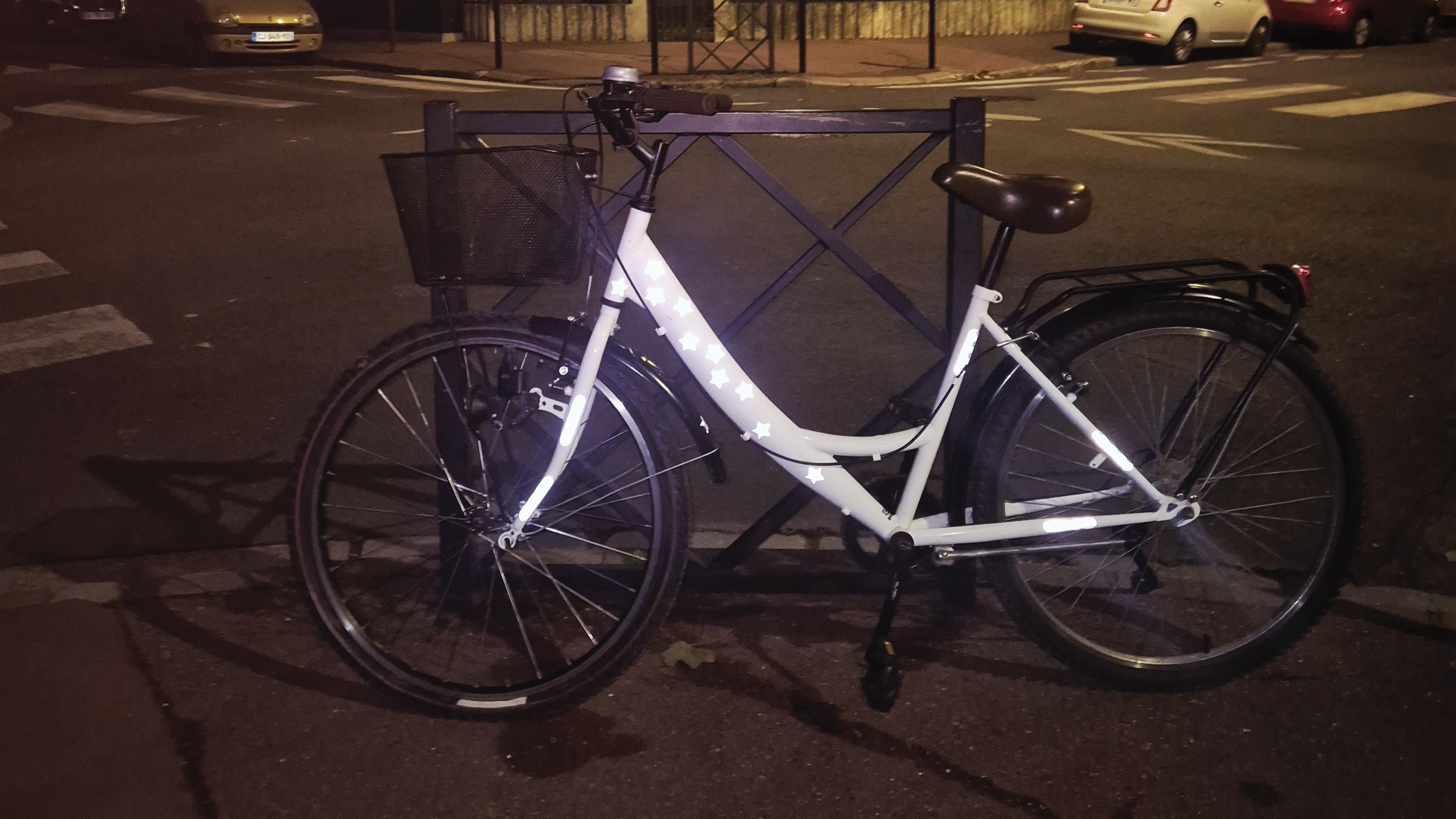
The bike I bought from Grandpa Vélo was sold to me as the latest Icelandic model, popular amongst women, lightweight, made of aluminium, with dirt tires and a basket. A bike for all situations and terrains.
In reality, it was a heavy, iron-framed bike with every feature a bike could have, except the one that mattered: getting me from point A to point B. No need for mudguards, a chain guard, a basket, a luggage rack, front and back lights when the bike doesn't properly coast, brake or change gears.
The bike I had gone to see that day was not even the one I ended up purchasing. His garage was packed with bikes, and the one I had come to see was inconveniently lodged behind about 30 others. He told me it wasn't even worth looking at. Instead, he showed me this so-called latest Icelandic model. He had two of them, he said, and the bike was so coveted that he was keeping one especially for his daughter. I still wonder whether he was a kindhearted, slightly senile man or a clever merchant who intentionally sold me a hoax.
The front light was broken. The brakes rubbed against the tire, making the bike drag and difficult to pedal. I spent a significant amount of time adjusting the brake pads with a wrench to accommodate the dirt tires he had put on. The mudguard rubbed against the spokes until I bent it into shape. He even tried to give me a plastic chain guard that probably would have rubbed against the chain. The chain even jumped when I changed to the lowest gear, and the tires kept going flat.
Four flats in total. I even got one on my birthday. I changed the inner tube three times myself before taking the bike to a shop. I spent €80 on the bike, €30 on inner tubes, €15 on a professional repair, €15 on fixed nuts for the seat and front wheel, and about €30 on locks. €170 in total, not counting at least two hours spent wheeling it home when it was flat, or the time spent trying to make it work.
Somewhere along the way, I began doubting my ability to change a flat, to ride a bike, and to judge a good investment.
I kept investing in it because it was my bike and it had potential. Surely, with one more adjustment, one more repair, it would finally become what I hoped. But this is the trap of sunk cost: the more I had already invested, the harder it became to let go. Any more time spent on this bike would have been lying to myself. Making the initial mistake was painful enough. I didn't need to keep punishing myself trying to make this bike work. Better to accept the loss and move on.
I was already avoiding the bike. So, on the fourth flat, I was so done. If only changing the tire one more time would have made this bike work. Too bad. Too little, too late. I was done. I didn't want to wheel it home again, take photos of it, try to sell it for €20, or explain its many faults to a potential buyer, or worse, deceive them. Further investing in a bike I did not accept as is, and had bet on solely for its potential, would have just added to the burden.
So I abandoned it on the side of the road, stripping it of everything that could one day be useful to me and my next bike, mainly the locks and the fixed nuts.
Maybe this bike will be exactly what someone was looking for, providing spare parts or falling into the hands of a loving bike mechanic. Someone's trash is someone else's treasure, right?
Anyway, now I have no bike. So I am available for the right bike. A simple, lightweight, small-framed bike, with somewhere to lodge a bag of groceries and store my helmet. A bike I can rely on to provide transportation and not to leave me stranded. A bike whose essentials work, and that does what I need it to do. Not one with every superficial feature and nothing of substance.
Good riddance to this bad ride.